Years ago, a well-meaning but indelibly frank friend of mine offered to give me a ride home from a neighborhood bar. I declined, reminding her that my apartment was merely around the corner of the same block and that it was a beautiful night to walk.
“Are you sure? It’s not a very good neighborhood.”
I felt a fire ignite inside my chest. By the time it reached my lips, I managed to extinguish the flames and replace them with a polite smile. I laughed the laugh we learn to laugh when we are young and a very clever adult insists they’ve stolen our nose long after the jig is up. Looks can be deceiving. A statement is not a fact. And facts are seldom stated. Nevertheless, I stated one to her—a fact I believed to be as plain as the nose lodged in between Aunt Susan’s knuckles.
“It’s a fine neighborhood.”
A simple statement, but a profound truth—one based in experience. Not appearance. As all the truest truths are.
What my friend didn’t know was that at the end of my street there was a mural. A piece of revolving street art, ever changing, with a life and history as intricate as those belonging to every member of the group that would gather before it daily. A human hodgepodge exchanging stories, laughs, and liquor. A scene you might be weary to pass through until you were greeted warmly. But you were always greeted warmly. These corner compatriots: some tenants, some living in tents, and some only pausing on their journey to or from a local business, drawn in by the warm familiarity of the scene, all joined, daily, in fellowship.
My friend didn’t know that the staff of the local restaurants know all the regulars by name and face. And that the bartenders know you by drink. This kind of attention is care that transcends beyond customer service. It is in the service of humanity. An acknowledgement of our shared existence. An effort that whispers gently, I see you and you matter.
My friend didn’t know that there is a woman one building over who punctuates the evenings with the loudest, most exquisite orgasms I have ever heard—a true symphony of ecstasy. I root for her. I once returned home at the precise moment to overhear the following exchange in response to her most enthusiastic moaning:
Neighbor A: “SHUT UP!”
Woman’s Sexual Partner: “You shut up!”
Neighbor A: “F**K YOU.”
Woman’s Sexual Partner: “Actually, I’m f**king her!”
Neighbor B: “Yeah. We ALL know that.”
I applauded the scene as the weight of my day floated away.
On Sunday there’s a lemonade stand. One cup will cost you a dollar and the answer to a curious child’s question. She asks more personal questions than most adults I know. And she is always grateful for your answer.
A few months ago there was a car accident, the unnerving sound of crunching metal mingled with shattering glass and a scream. It took mere seconds for more than twenty concerned strangers to rush out of their homes to see, not if, but how they could be of service.
Most of my neighbors know my cats by name. They have full, albeit one-sided conversations with them concerning such mundane topics as traffic, the weather, and who is a good boy. This an act of great kindness to two formerly abused and abandoned stray cats, as they are still learning and may never fully know how to receive love without fear.
In the Spring, the jasmine flowers that grow untamed on the sides of the buildings and across the fences bloom and sweetest smell wafts down the street, creeping through open windows at the most unexpected and altogether necessary times. It is a scent that heals, soothes, and inspires.
The lights of the observatory on the hill serve as nightly reminder of perspective. A standing testament to our place as a tiny microcosm in the grand scheme of things, they urgently whisper, Look up! Look around! Isn’t it all a wonder?
On summer nights, the air wraps you with it’s warmth. It’s the softest of blankets. And when it’s quiet you can hear the trains pass in the distance, beyond the freeway. If you close your eyes to listen, you could imagine yourself anywhere. This is grown-up magic.
My upstairs neighbor, Cheryl, like me, is a night owl. Our first interaction was a heated argument about mail. Five years later, I hugged her as she cried and relayed the circumstances of the death of her unborn son. I’d watched for months as the promise of new life manifested in the form of fresh Amazon deliveries on her doorstep. As I held her, I wondered what she would do with the crib she had received just that afternoon. A week later, I arrived home after work at nearly 3 AM. Cheryl greeted me at the gate. “Would you like some bacon? I just made it. I’ll bring some down for you.”
Monday and Thursday evenings a farmers’ market is erected outside the metro stop. Amidst the sea of concrete, commuters pause to buy farm fresh tomatoes. Often, these are the tomatoes rejected by the grocery stores because they don’t look perfect. Luckily, people who buy tomatoes outside the metro stop are not interested in perfection.
This is the neighborhood I love. This is my home.
Growing up as the daughter of a working-class, single mother in the suburbs, I witnessed firsthand the powerlessness that comes with being a perpetual renter. So, when investors purchased my apartment complex, I felt a familiar anxiety. Unable to evict due to the restrictions of Los Angeles rent control policies, a sum of money was offered to each tenant as incentive to vacate. We did some math. The investors’ likely return in the first year exceeded this first round of offers by hundreds of thousands of dollars. Further “incentives” manifested in the form of intimidation tactics that lasted for nearly a year.
The first wave of people to go were the newest tenants, untethered to the community, with nothing to lose and plenty of cash to gain. Next were those most fearful of the inevitable scrimmage to follow. Elderly tenants, some who had called this street home for decades, were bullied and threatened. Loss of sleep from constant construction noise, near-daily interruptions in water and gas services, and a slight increase in the value of the offers pushed the next wave of people to leave. More than once I returned home to my apartment filled with a sickening smell. The construction crew had shut off and returned the flow of gas to our stoves and heaters, but failed to reignite our pilot lights, allowing gas to flow freely into our homes. Tenants fearing for the lives of their pets were the next to go.
The vacant units were remodeled to resemble an exhaustingly common modern aesthetic. Carpet was exchanged for cool, gray, faux wood floors. Stainless steel appliances and white cabinetry were installed to justify a rent increase of over a thousand dollars per unit. Meanwhile, the exterior of the building was upgraded with a fresh coat of paint and some drought-resistant landscaping. Up and down the street, this process was repeated until nearly the entire block was remade with surgical precision, a procedural facade lift with a personality reduction.
Through it all, six of over twenty units persisted, some unwilling and others unable to move. Just before the remodeling finished, a final offer was extended. It was a very good offer, one that has caused more than one jaw to drop within my circle of friends. Not enough to ensure I could have stayed local. Not with this rising cost of living. But it was exactly what I had hoped for. Still, I couldn’t bring myself to accept it—a choice that cost me a chunk of change, both monetary and circumstantial. But what would it have cost me to go?
Sitting outside a local cafe one afternoon, I bought a book of self-published poetry from a bearded wanderer. As I thumbed through the pages one phrase stuck:
“It’s not what I leave behind,
but what I can’t leave behind,
that will tell my life story.” (1)
When do we leave that which we love?
And how?
I stayed.
To the dismay of many friends and family.
Against my own logical reasoning.
I stayed.
And honestly—
Sometimes I regret my choice.
Sometimes I’m so grateful for it, I could burst.
Sometimes I look at all the new paint and glass and think it does look nice.
But, is that what makes it good?
Personally, I think not.
I think it’s the lemonade.
And the surprise bacon.
And a million little things that are imperceptible to visitors, even friends.
And especially to real estate developers.
The people I’ve come to know here are not my friends or family. We will never go for a drink or grab a cup of coffee. I probably wouldn’t ask them for a cup of sugar, though I have, in one emergency potato salad situation, borrowed an egg. Still, they are woven into the fabric of my life, inseparable from my understanding of home. Acknowledgment of these peripheral relationships is optional. But doing so makes us better. Happier. (At least me and some studies say so.) It has added value to my life in ways I’m still discovering. What I do know is that life is long. And nothing is permanent. The parts never stop moving.
For those of us left over, we are caught. Between what was and what will be. The street is riddled with vacancies now–entire blocks of storefronts with signs proclaiming their space to be “For Lease.” On the sidewalks below the signs, our neighbors sleep on mounds of cardboard and dirty blankets. This street is their home, too. They’ve been here longer than most. And sometimes I wonder if there will ever come a time when we invest in human life the way we invest in luxury apartments. And sometimes I sit outside cafes, sipping gourmet coffee and reading articles about the growing rate of homelessness in the city, while across the street desperate men and women beg for scraps. We pass the same spots, breathe in the same air, and stand under the same lights. My question shifts:
When did that which they love leave them?
And how?
At the end of my street there was a mural. It marked a gathering place. A co-op of familiar imperfection. A proverbial stoop where diverse individuals found common ground. But they haven’t been around in a long time. Some of the newcomers had a meeting. The wall’s been painted white.
——————————————————————————————————————
(1) an excerpt from Choice of The Heart, R. C. Bates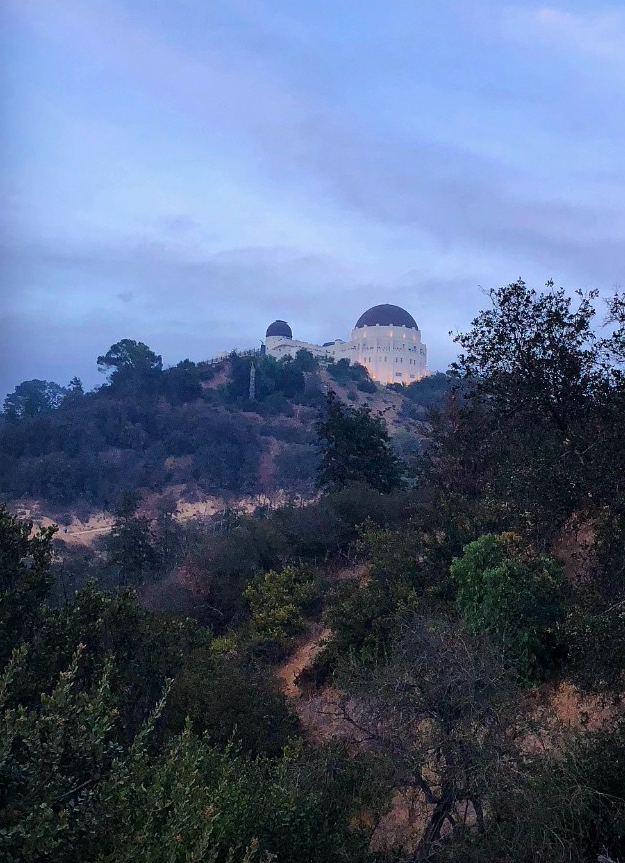 From Below–An Illuminated Griffith Observatory, Los Angeles, CA
-
Subscribe
Subscribed
Already have a WordPress.com account? Log in now.
 The Hurt and The Happy